No Gatekeepers Needed: How Desi Creators Built Their Own Audiences — Then Made the Critics Come to Them
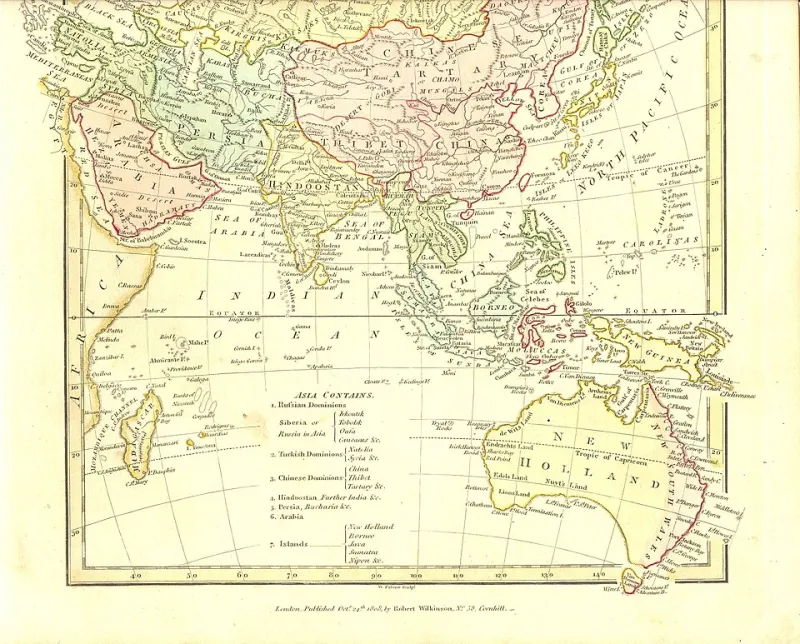
Photo: Robert Wilkinson, Public domain, via Wikimedia Commons
For a long time, the path to legitimacy in the arts ran through specific institutions. You needed the right review in the right publication. A feature in a magazine with the right readership. A critic with the right credentials to declare your work worth paying attention to. For South Asian artists in the US, that path had an extra obstacle: those institutions weren't particularly interested in their work to begin with.
So some of them stopped waiting.
What's happened over the last several years — accelerated dramatically by TikTok, Reels, and the broader short-form video explosion — is something that deserves more attention than it gets in conversations about the entertainment industry. A wave of South Asian creators built massive, devoted audiences entirely outside of traditional media ecosystems. And then, from that position of actual cultural power, they negotiated with legacy institutions on completely different terms than their predecessors ever could.
This isn't just a creator economy story. It's a story about who gets to decide what matters — and how that decision-making has permanently shifted.
The Old Equation and Why It Was Rigged
Let's talk about how the traditional criticism and discovery pipeline worked, because it's important context. A musician releases an album. A journalist at a major outlet reviews it. Readers trust that outlet's taste and seek out the artist. The outlet's endorsement is the engine of discovery.
For South Asian artists, that engine was essentially stalled. Not because the work wasn't there — but because the people running those outlets didn't have the cultural fluency to evaluate it, didn't see an audience for it among their readership, or both. Fusion projects got filed under 'world music' and treated as curiosities. South Asian comedians were reviewed through a lens of 'how relatable is this to a general (read: white) audience?' Literary fiction by Desi writers got praised when it explained South Asian culture to outsiders, and quietly overlooked when it assumed insider familiarity.
The result was a system where South Asian artists were constantly auditioning for the approval of people who didn't really understand what they were making.
Building the House First
The creators who broke this pattern did something elegantly straightforward: they built their audiences before anyone in legacy media had a chance to ignore them.
Take the trajectory of artists like Vidya Vox, who had amassed hundreds of millions of YouTube views before most American music publications had written a single word about her. Or the wave of South Asian comedians — Hasan Minhaj being the most prominent, but far from the only one — who developed massive social followings that made their mainstream breakthroughs feel less like discoveries and more like formal acknowledgments of something that had already happened.
On TikTok specifically, South Asian creators have built some of the platform's most engaged communities. Creators covering everything from classical Bharatanatyam to Punjabi pop to Desi cooking to South Asian mental health have accumulated audiences in the millions — audiences that are deeply loyal in a way that passive streaming numbers don't fully capture. These are communities, not just follower counts.
And that distinction matters enormously when it comes to negotiating with legacy institutions.
When the Critics Finally Showed Up
Here's where the dynamic gets interesting. When a South Asian creator has two million TikTok followers and a sold-out US tour booked independently, the power relationship with a mainstream publication is fundamentally different than it was for earlier generations of artists.
The publication needs to cover them now. The audience already exists. Not covering them is the editorial risk — it makes the outlet look out of touch.
"I've watched the conversation completely flip in the last three or four years," says one music journalist who covers the South Asian indie scene. "Artists who would have been ignored five years ago are now getting pitched to by editors who want to seem current. The creators didn't change. The leverage did."
That leverage shows up in concrete ways. Artists are increasingly able to set interview terms, control how their cultural context gets presented, and push back on framing they find reductive. Some have started requiring that publications assign writers with actual familiarity with South Asian culture — or at minimum, consult with someone who has it — rather than sending a generalist to cover a classical fusion performance like it's an anthropological expedition.
The Critics Who Got It Right (and What That Looked Like)
It would be unfair to paint all mainstream criticism as hostile or clueless. Some outlets have genuinely evolved. Pitchfork's coverage of South Asian artists has grown more sophisticated and contextually literate. The New Yorker has published pieces on Desi artists that treat the work on its own terms rather than as a gateway drug to explaining immigration to subscribers. NPR's music coverage has long been ahead of the curve here.
The common thread in coverage that actually works? It starts from the assumption that the artist's cultural context is an asset to the work, not a barrier to understanding it. It doesn't demand that the artist translate themselves for an imagined outsider audience. And critically, it tends to involve writers who came to the work with genuine curiosity rather than assignment-desk obligation.
Creators notice the difference. And increasingly, they're making decisions about media partnerships based on it.
What This Means for Discovery Going Forward
The broader implication here is a restructuring of how cultural authority works in entertainment. The old model assumed that legitimacy flowed downward from established institutions. The new model — the one South Asian creators have been actively building — suggests that legitimacy can be constructed from the ground up, community by community, and that institutions either adapt to recognize it or become irrelevant to the conversation.
For a generation of Desi artists who grew up watching their work get overlooked or misrepresented by the mainstream press, there's something deeply satisfying about that inversion. They didn't wait for permission. They created the conditions under which permission became beside the point.
The spotlight, it turns out, doesn't have to come from above. Sometimes you build it yourself — and then let everyone else figure out how to step into it.